THE VOLCANO HAS AN ADDRESS
Fogo chose none of the easy places to grow grapes.
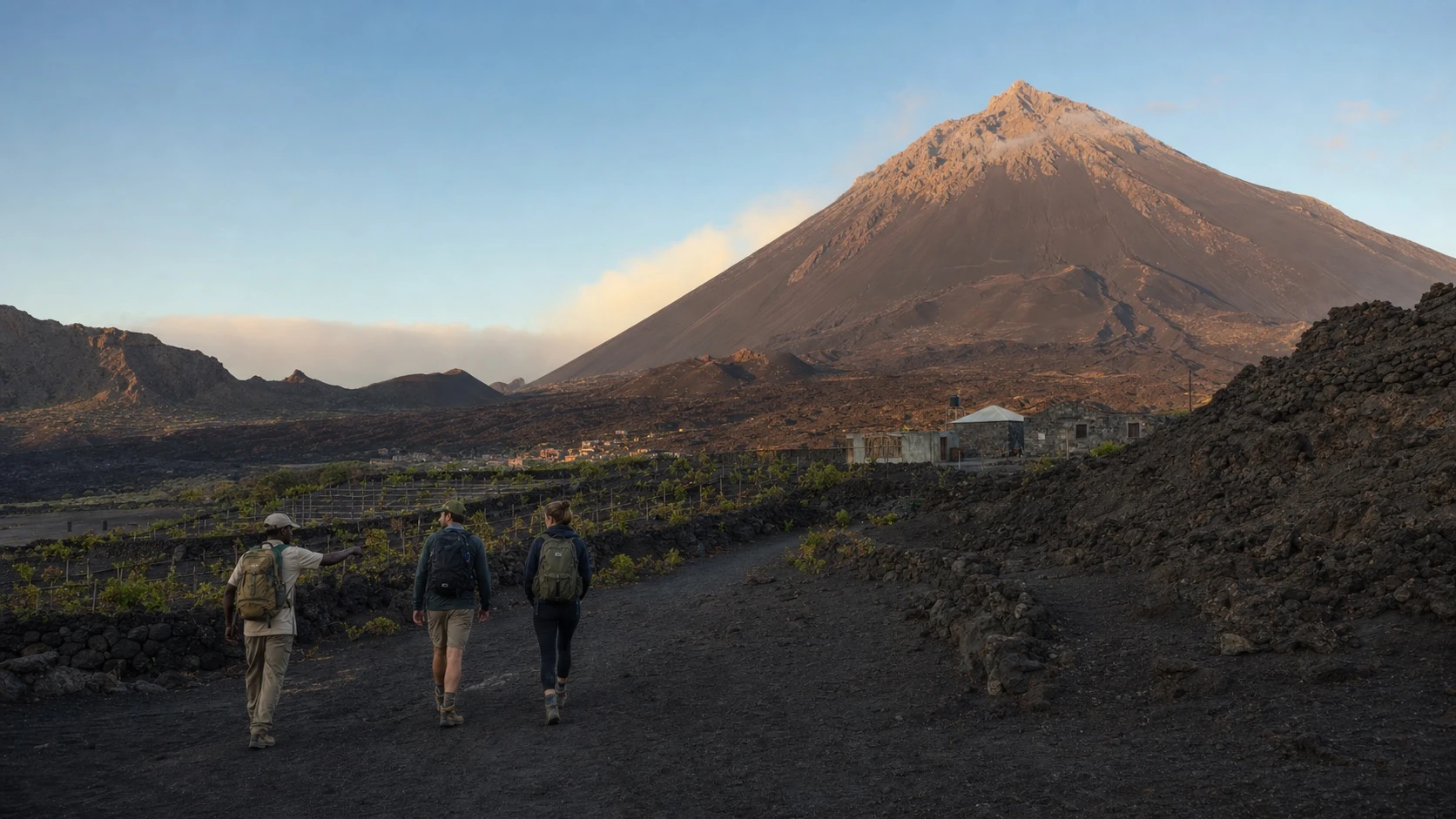
There are easier places to plant grapes.
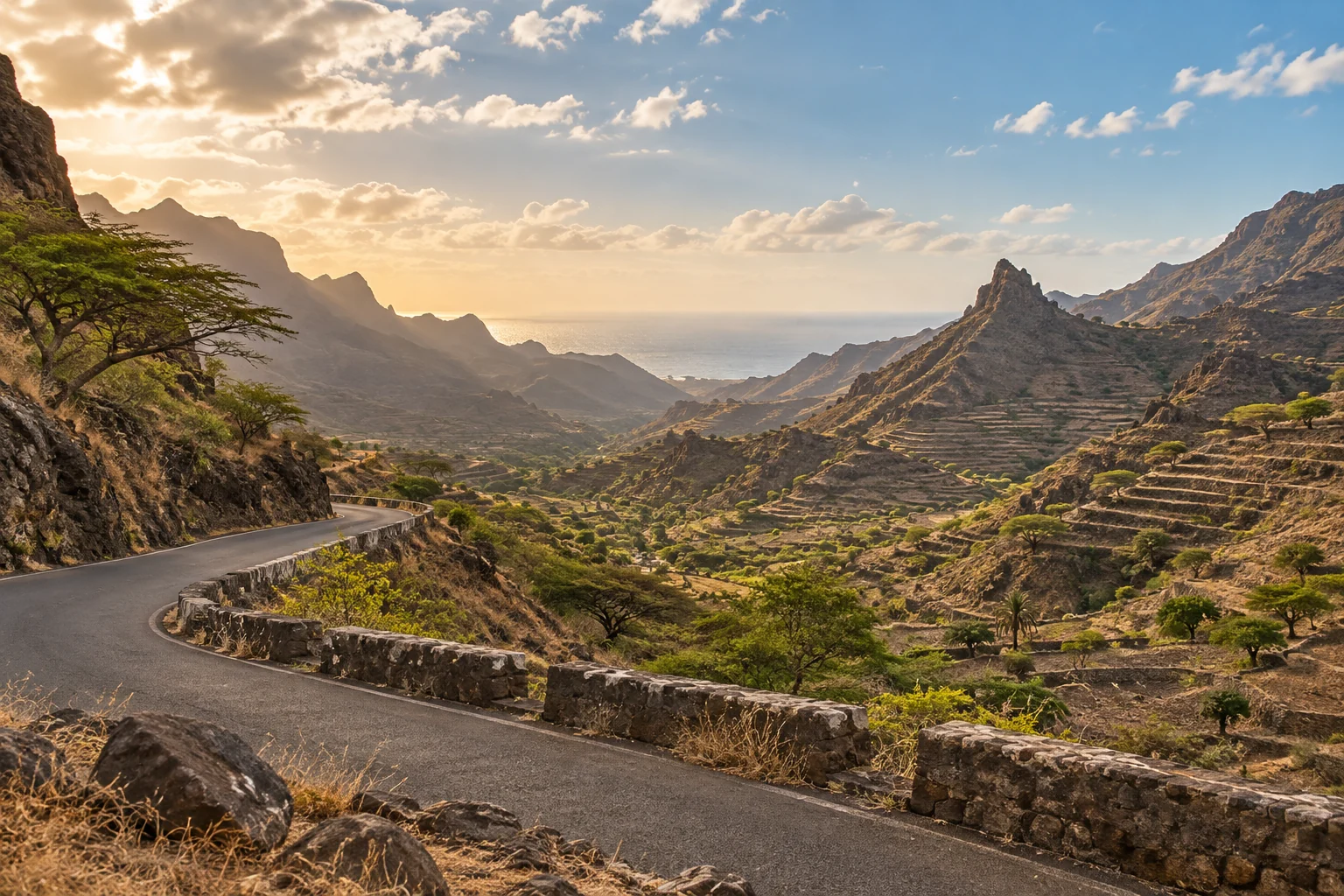
Places where the ground does not rise 2,829 metres into the sky. Places where an active volcano is scenery, not a neighbour. Places where a road is unlikely to disappear beneath new earth.
Fogo chose none of them.
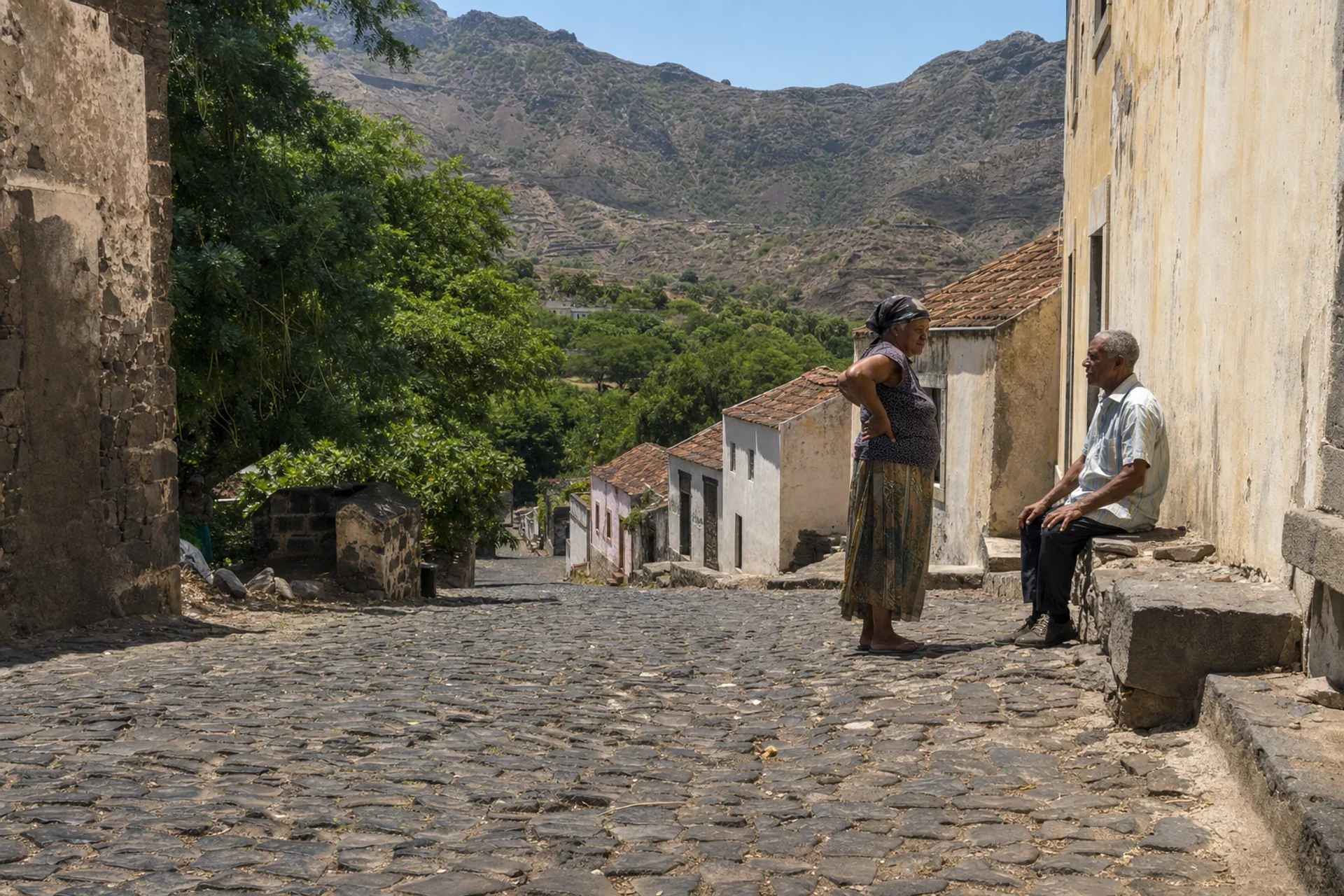
Inside the great caldera, Chã das Caldeiras sits in a landscape that looks unfinished: black lava, sharp light, small fields and Pico do Fogo holding the horizon like it owns the deed. People live here. They grow vines, fruit and coffee. They make wine and cheese. After the 2014 eruption sent lava through communities, they built again.
That last sentence is easy to romanticise from a safe distance. We would rather ask the harder question.
Why return?
Geology can explain an eruption. It cannot fully explain the relationship between a community and the ground that feeds it, frightens it and gives its produce a character found nowhere else. Even UNESCO’s account of Fogo describes something beyond utility: a bond between people and volcano that approaches the mystical.
You can taste the argument.
Wine grown in volcanic soil. Cheese at the edge of the crater. Dust that finds its way into your shoes and travels home without permission.
Fogo is adventure, but it is not a dare. Mountain conditions, weather and local expertise have the final word. Manuel coordinates the day around the people who know the terrain now—not the version of it printed last season. If a specialist says the mountain is closed, the mountain is closed. There is still an island worth meeting.
That is the RITE way to experience Fogo: close enough to feel its scale, curious enough to hear its people and sensible enough not to confuse risk with a good story.
The volcano has the last word.
It also pours the wine.