THE PIRATES LEFT. THE STORIES DIDN’T.
Cidade Velha kept the better ending.
Francis Drake came twice. Jacques Cassard arrived later and took even the cathedral bells.
Cidade Velha kept the better ending.
The road from Praia does not prepare you for it. One minute the capital is still in the rear-view mirror; the next, you are standing inside the first European colonial town built in the tropics, with the Atlantic glittering as though it has never carried trouble.
It has carried plenty.
Above the town, the Fortaleza Real de São Filipe watches the sea. It was raised after Drake’s attacks, when walls were expected to do what warnings could not. Below, ruined churches, old streets and the marble pillory hold another history—one that cannot be made charming for the sake of a tour. Cidade Velha helped shape the Atlantic world, including its commerce, its Creole society and the brutal trade in enslaved people.
So we do not rush it.
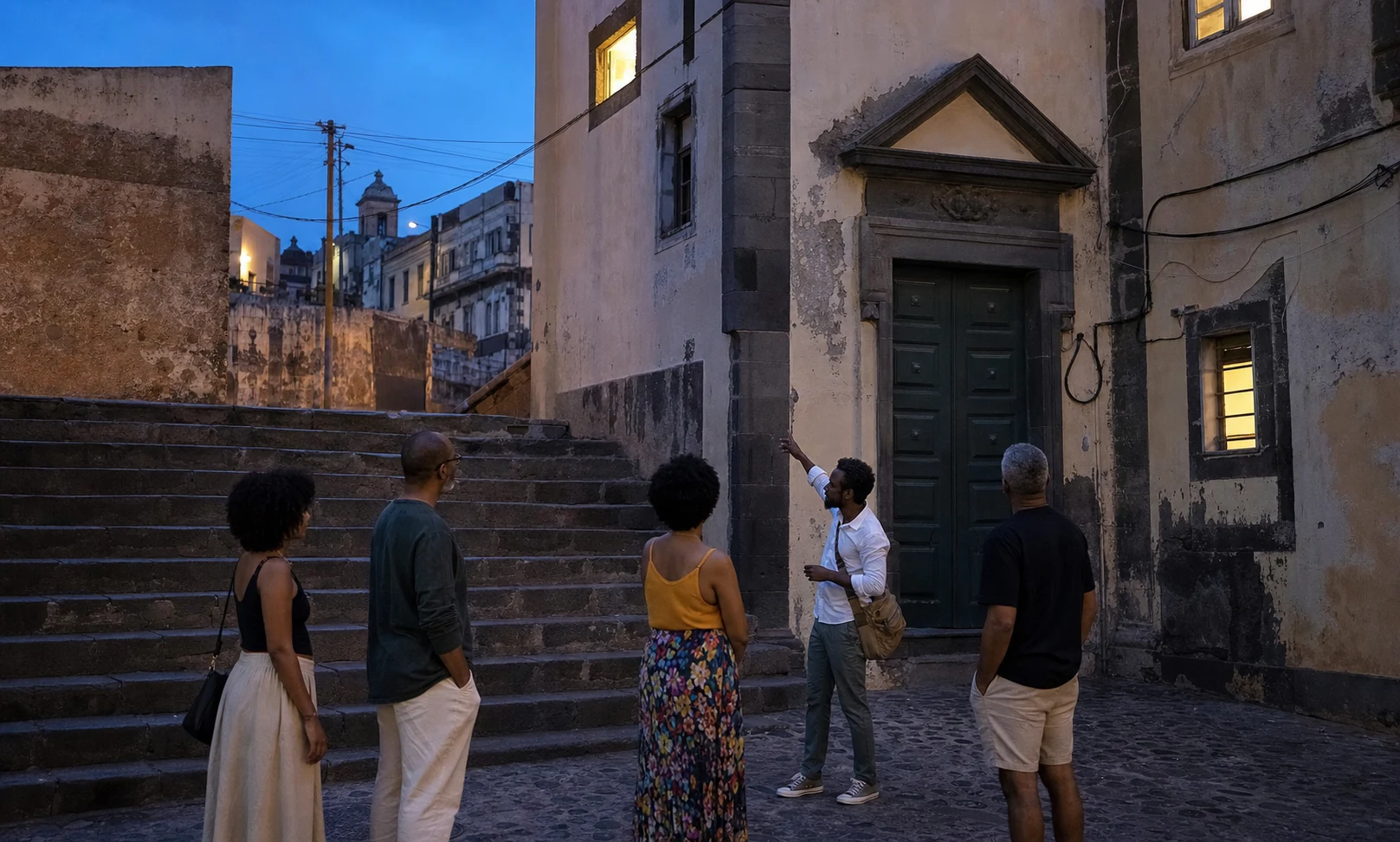
With Manuel, the pleasure is in knowing when to tell the story, when to question it and when to let the place speak without interruption. Which ships appeared on the horizon? Why was the fortress built up there? Did Cassard really leave with the bells? And how does a city survive after power, money and attention move elsewhere?
Some answers are written in archives. Others have been polished by centuries of retelling. The difference is part of the experience.
Look down from the fortress. Find the line between ocean and sky. Imagine being the first person in town to notice unfamiliar sails—and the last person anyone believed.
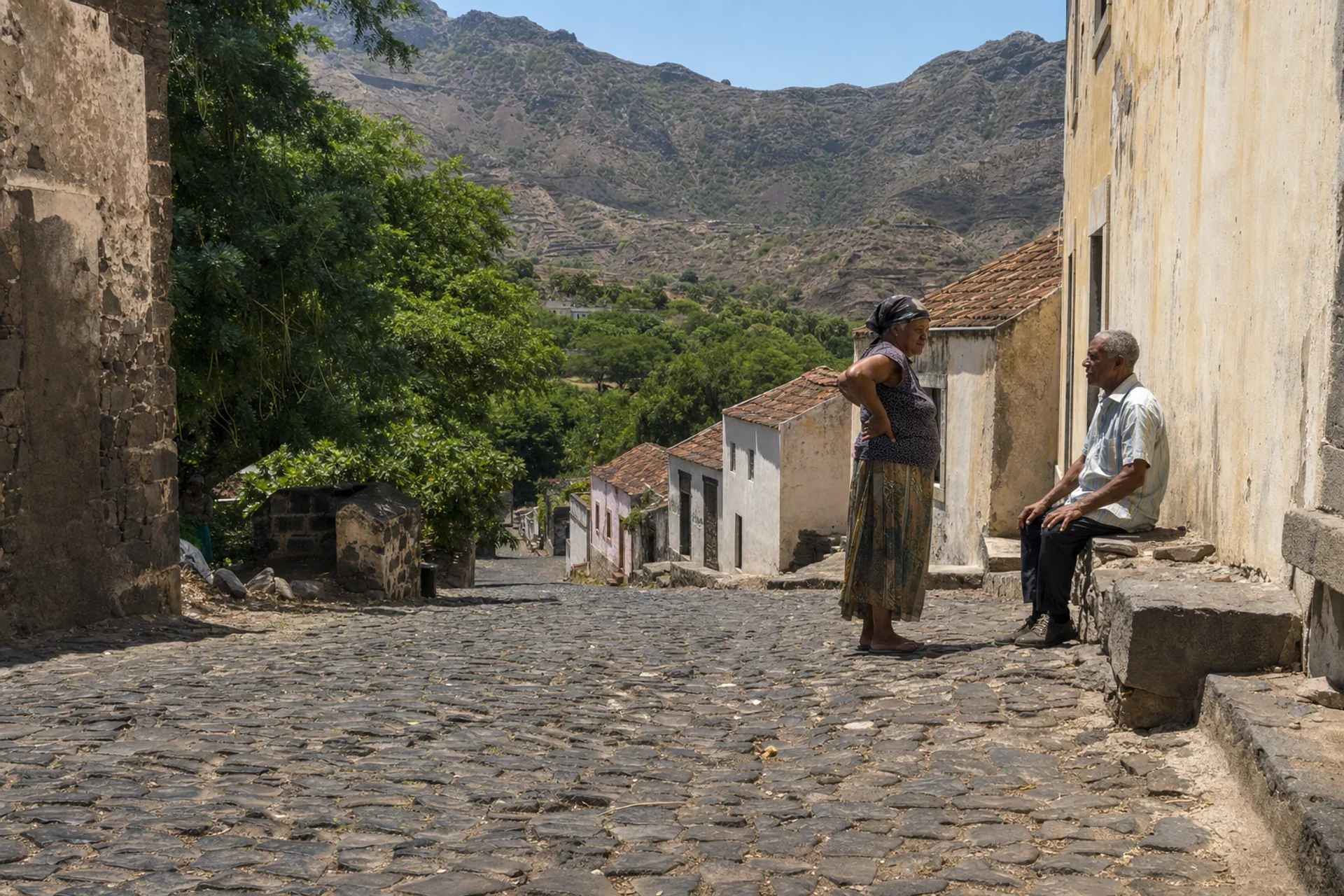
Then return to the streets for the quieter ending: doors open, food on tables, children passing through a place that history once tried to reduce to ruins.
The pirates left.
Cidade Velha did not.